

The government has set a target of achieving 100 million broadband subscribers by 2014 as against 8.59 million users by the end of February 2010.
The move seen as recognition of India's growing prominence as a technology and research provider.
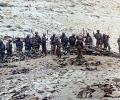
The US provided crucial intelligence to the Indian military last year that helped it successfully tackle the Chinese "incursions".
Intel Capital, the venture capital investment arm of world's largest chip maker Intel, is eyeing firms with chip design and telecom application capabilities in India to infuse capital over the next couple of years.
Intel Capital, the investment arm of Intel Corp, is seeking further investment opportunities to support its WiMax (Worldwide Interoperability for Microwave Access) strategy, since it believes the technology could shake up the wireless data market.

A computer with NPU can handle a wide range of tasks directly on personal devices without relying on a Cloud service.
In a major boost to China's IT sector, Intel Corporation on Monday announced plans to invest a whopping $2.5 billion to build a 300-mm wafer fabrication facility in the coastal northeast Chinese city of Dalian
Intel, which has virtually no momentum in the mobile market, would roll out the next generation Atom processors on smartphones next year.
Intel, which recently announced over 10,000 job cuts worldwide, on Thursday said impact of the layoff decision was "relatively minimal" on its workforce in India, where the world's largest computer chip-maker plans to set up a manufacturing facility.
Ravishanker Kuppuswamy and R Sivakumar of Intel speak about the challenges their team faced while designing and developing Intel's latest processor Xeon E7.
With most of the technical problems in delivering Internet connectivity over the electric power lines addressed, Intel Corporation is planning to start the user trials of the technology in India in the next few months.
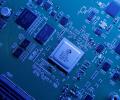
The Indian government is keen to woo major semiconductor players, but a global race to attract them to countries where there is already an ecosystem is making it difficult for India to attract the biggies in the business. On Wednesday the government decided to throw open the doors to more players to participate in its semiconductor scheme. It is now looking at not only 28 nanometre (nm) chips and below, but higher nodes like 40 nm.

Two full-fledged semiconductor fabrication plants are going to come up in India very soon entailing multi-billion dollar investment besides several chip assembly and packaging units, Minister of Electronics and IT Rajeev Chandrasekhar said. In an interview with PTI, the minister confirmed that the two projects include a $8 billion proposal submitted by Israel-based Tower Semiconductors and the other from Tata Group. "I am happy to share this with you and you are probably the first one I'm sharing this with.
Company to bring in initiatives like biometric transactions to improve efficiency.

Chipmaker Intel, which last week announced a partnership with watches and fashion accessory retailer Fossil Group to develop wearable devices, is scouting for manufacturers to launch such devices in India.

Admitting for the first time, a top United States diplomat has confirmed that there was 'shared intelligence among Five Eyes partners' that had prompted Canadian Prime Minister Justin Trudeau's offensive allegation about Indian agents' involvement in the killing of a Khalistani extremist on Canadian soil, according to a media report on Saturday.

The aircraft was allowed to move inside India as the air defence personnel knew who was inside the plane, they said.
Intel will build a new chip factory in Israel at a cost of $4 billion, the biggest ever foreign investment in the country
Intel is chipping in with its own recipe for inclusive growth in India by planning to train one million Indian teachers in the next two years.

In June this year, the Bengaluru-based online marketplace has jumped into the fiercely competitive smart device market in India by launching its calling tablet for Rs 9,999.

Ranneeti: Balakot And Beyond veers between intriguing and boring, observes Deepa Gahlot.

'No one manufactures intelligence at the moment.' 'This is a concept that your IT industry understands.' 'What you need is infrastructure. Everything else can then be taken care of.'
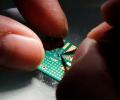
The exclusive club that dominates the global semiconductor fab scenario is about to get a new member. Taiwan, South Korea, and China control nearly 70 per cent of the global capacity. SEMI, the global industry body for semiconductor and electronics design and manufacturing, projects all fabs collectively will churn out 30 million wafers a month this year.

In its annual threat assessment presented before the Senate Armed Services Committee during a Congressional hearing on Tuesday, the US intelligence community said the expanded military posture by both India and China along the disputed border elevates the risk of armed confrontation between the two nuclear powers that might involve direct threats to US persons and interests and calls for America's intervention.

"Corporate spending on PCs will improve significantly in 2010 and emerging markets will grow faster than mature markets," Intel chief executive and president Paul Otellini told reporters in New Delhi on Tuesday. He, however, did not specify any numbers.

Intel Corporation chief operating officer Paul Otellini on Monday advised Indian CEOs in the information technology industry to accelerate Wi-Fi (wireless networking) adoption in order to continue its growth in a technology savvy global economy.

Micron plans an assembly testing, marking and packaging project of $1 billion, and talks are on to set up a memory chip plant for captive requirements.
"We sponsor faculty awards, sabbatical grants, student fellowships, workshops and internships," said IBM India Research Lab Director Dr Daniel Dias.
India is all set to make its presence felt in the $47 billion global outsourced semiconductor testing and packaging market, an arena where Malaysia and Vietnam have been way ahead so far. The Cabinet last Thursday cleared two projects, the Tata's assembly testing and packaging plant (ATMP) and the Murugappa-owned CG Power with Renesas from Japan as its tech partner. These, together with Micron's assembly and testing plant which is already being constructed in Sanad in Gujarat, will collectively invest Rs 47,300 crore to set up the factories.

Apple's new MacBook Pro laptops and iMac with M3 chipsets will be available across 27 countries, including India, from November 7 onwards, according to an official statement. The company announced the launch of three M3 chipset models with built-in next-generation GPU architecture and a faster CPU with an eye on artificial intelligence use cases, gaming, entertainment professionals and other segments that need high-resolution image processing. The company has launched two variants of MacBook Pro laptops with 14 and 16-inch displays at a starting price of Rs 1.69 lakh and Rs 2.49 lakh, respectively.

The chip maker is putting money in his low-cost Braille printer project.

WiMAX is generally said to deliver 70 megabits per second over 50 kilometers but can either operate at higher bitrates or over longer distances.

The top 10 films of the year may not be great by themselves but they stand out amidst the other OTT releases.
